Voyager 1 Reaches One Light-Day From Earth, About 16 Billion Miles Away
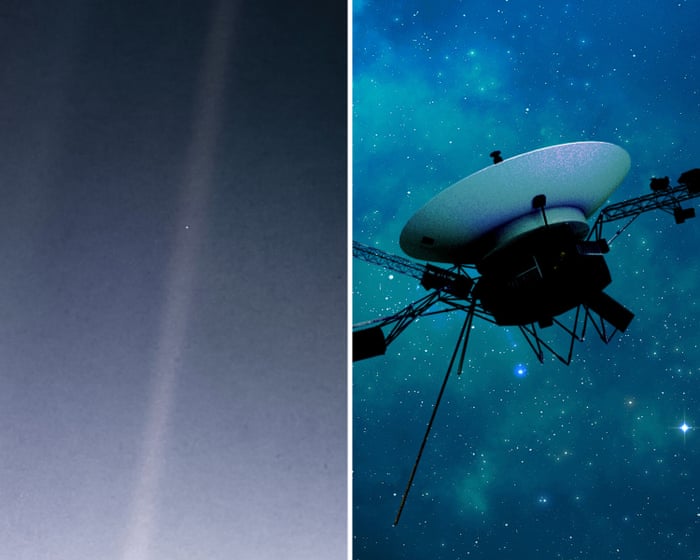 Photo: The Guardian US
NASA's Voyager 1 probe reached a distance of one light-day from Earth, roughly 16 billion miles, at 5:16 a.m. ET on Wednesday, Nov. 18, according to NASA's calculations, the farthest any human-made object has traveled. Confirmation will not come until Thursday, because radio signals moving at 186,000 miles per second take 24 hours to reach the probe and another 24 to return.
Officials at NASA's Jet Propulsion Laboratory in California have scheduled an event for Thursday, Nov. 19, to discuss the milestone, and a 13-member team awaits the first post-light-day signal. Launched in 1977 to photograph Jupiter and Saturn, the probe now flies at nearly 38,000 mph and crossed the heliopause into interstellar space in 2012. Its twin, Voyager 2, added Uranus and Neptune before following in 2018. The returning signals are so faint that the Deep Space Network needs a massive dish to hear them. “Reaching one light-day is an astounding feat, one that I never expected to see,” said Voyager project manager Suzanne Dodd.
Newsmax, the right-leaning outlet here, keeps to a short report: Voyager 1 has traveled nearly 50 years, hit the one-light-day milestone Wednesday, and is already the most distant man-made object. Its excerpt carries no quotes, no team details and no mention of Voyager 2. The left-leaning outlets go further. CBS News calls it a distance record, names Voyager 2, notes the 13-member team, says no other space agency has attempted a comparable mission, and says many rank Voyager with the Apollo landings. The Guardian US takes a reflective turn, casting the probe as a mirror for humanity and the damage done to Earth since 1977, and adds the Mini Cooper size comparison and a Star Wars reference. The sides agree on the core facts. Defector, an independent outlet, offers an essay on why humans struggle to grasp cosmic distances, while The Hindu's report largely matches the CBS and Newsmax coverage.
How the sides differ Right sources give a brief milestone report; left sources add Voyager 2, team details and reflection on humanity; alternative sources split between an essay on scale and a wire-style report.
Headline, comparison and summary written by AI from the articles below. AI can make mistakes, so check the original articles before relying on a detail.
Word choice
The words each side uses for the same thing, taken from their articles.
- Voyager 1 as an objectLeft “human artifact”Alt “human-made object”Right “man-made object”
- the achievementLeft “distance record”Right “milestone distance”
- CBS NewsVoyager 1 sets distance record of 1 "light day" from Earth
- The AtlanticPaywallVoyager 1 Is a Light-Day From Home
CBS News reports the record, the 13-member team and Voyager 2, while the Guardian US uses the 49-year journey for a reflective piece on humanity and the 'pale blue dot'.
Defector writes an essay on why humans cannot grasp cosmic distances and how light-based units help. The Hindu reports the milestone straight, quoting project manager Suzanne Dodd and the Thursday event.
Newsmax gives a brief report that Voyager 1, nearly 50 years into its journey, hit the one-light-day milestone on Wednesday as the most distant man-made object.
How we sort sources into left, alternative and right →
Which coverage felt most fair?
One tap. No account needed.