Native American Women Win Historic Offices in Tribal, State and Federal Elections
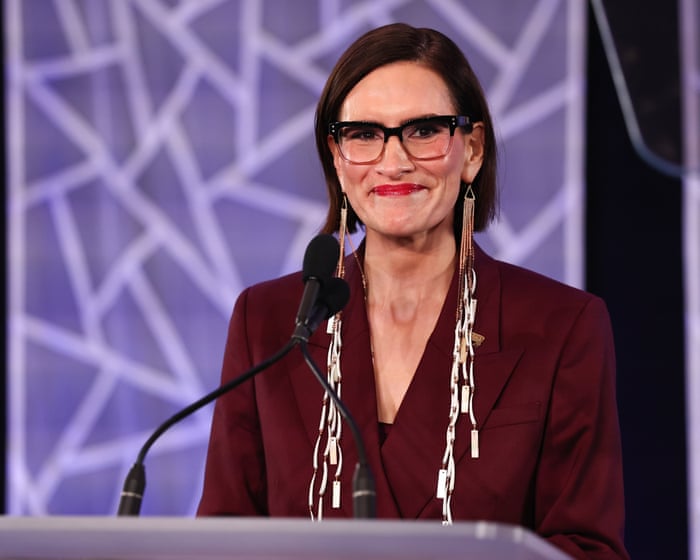 Photo: The Guardian US
Voters elected the first Native American woman governor and U.S. senator, along with the first women to lead two tribal nations, in Tuesday's midterm elections, according to reports on the results. Advance Native Political Leadership and the news site ICT said at least 75 Native women or non-binary and Two Spirit candidates won nationwide in the November midterms.
Deb Haaland, a citizen of Laguna Pueblo and President Joe Biden's former interior secretary, will lead New Mexico as governor. Peggy Flanagan, a member of the White Earth band of Ojibwe and Minnesota's lieutenant governor, will represent her state in the U.S. Senate. Crystalyne Curley will become the first woman to lead the Navajo Nation, one of the country's largest tribes. Tina Abrams will lead the Seneca Nation of Indians in western New York, the first woman to lead the state's largest tribe in its modern history. Mary Peltola, who is Yup'ik, could become a second Native woman in the Senate if she wins her still undecided race in Alaska. Jordan James Harvill, a Cherokee Nation citizen and strategist with Advance Native Political Leadership, called the results a seismic shift in Native communities.
Left-leaning coverage, represented by The Guardian US, frames the results as part of a broader set of midterm firsts, including the country's first Muslim senator and first Black female governor. Its headline quotes the phrase "seismic shift," and it leads with the 75-candidate count and the Advance Native Political Leadership and ICT report, naming each winner and tribal affiliation. Alternative coverage from AP, datelined Albuquerque, New Mexico, takes a more personal angle. It opens with Curley's third-grade field trip to the Navajo Nation Council, where a heated debate between two tribal lawmakers inspired her, and quotes her on wanting to be there. Both describe the wins as historic. Right-leaning outlets had not reported this story at the time of writing, while left-leaning and alternative outlets had.
How the sides differ Left sources emphasize the nationwide count and a 'seismic shift'; alternative sources open with Crystalyne Curley's personal story; right-leaning outlets had not covered it.
Headline, comparison and summary written by AI from the articles below. AI can make mistakes, so check the original articles before relying on a detail.
The Guardian US leads with the count of at least 75 Native women and non-binary candidates elected, lists the major winners, and quotes an Advance Native Political Leadership strategist calling it a seismic shift.
AP opens with Crystalyne Curley's childhood visit to the Navajo Nation Council and her own words, presenting the wins through a personal story across tribal, state and federal races.