Gaia Star Data Release and DIA Space Threat Report Draw Coverage From Right and Alternative Outlets
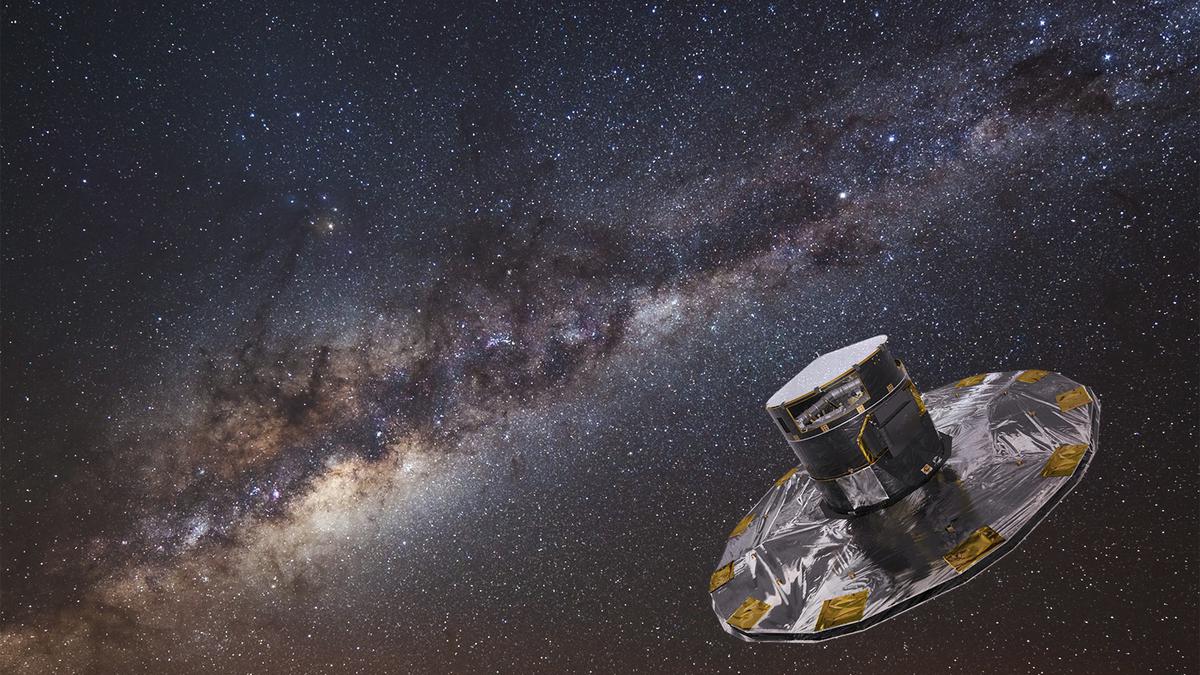 Photo: The Hindu
The European Space Agency's Gaia probe has released a third dataset covering almost 1.8 billion stars in the Milky Way, revealing unexpected starquakes, movements on star surfaces likened to earthquakes. The data also produce the largest chemical map of the galaxy, detailing age, mass, chemical composition, colour, temperature and metal content for millions of stars, and bring discoveries about binary star systems, quasars, asteroids and exoplanets. Separately, a Defense Intelligence Agency report released last week describes rapidly growing threats to U.S. interests in space, focusing on China and Russia. The DIA, the War Department's intelligence service, lists ground-based laser dazzling systems meant to blind or destroy satellites, offensive cyber capabilities, microwave weapons, and satellites that could use grappling hooks, fire projectiles, collide with other satellites or launch nuclear weapons. The report says Russia is developing a satellite designed to carry a nuclear weapon despite its obligations under the 1967 Outer Space Treaty, and it refers to a Russian satellite constellation-killer system.
The right-leaning Washington Examiner leads with the DIA report and presents it as evidence of the Space Force's rising importance, a point carried in its headline. It stresses that the report's careful language rests on extensive classified intelligence, describes the weapons vividly as real rather than science fiction, quotes the DIA on Russia's nuclear satellite, and notes its own earlier reporting on the constellation-killer. It does not mention Gaia. The Hindu, in the alternative group, takes a separate angle: an explainer on Gaia's findings, centred on starquakes, the chemical map and the other discoveries, with no mention of military threats. The two articles cover different subjects and share no facts. Left-leaning outlets had not reported this story at the time of writing, while alternative and right-leaning outlets had; those covering it focus either on Gaia's science or on space threats and the Space Force.
How the sides differ Left sources had not covered it; right sources stress China and Russia space threats, while alternative sources explain Gaia's star-mapping findings.
Headline, comparison and summary written by AI from the articles below. AI can make mistakes, so check the original articles before relying on a detail.
Not covering this story. None of the left-leaning outlets Crosswire tracks has reported it yet. What one side leaves out can be as telling as what the others report.
The Hindu runs an explainer on Gaia's third data release, focusing on starquakes, the large chemical map of the Milky Way and findings on binaries, quasars, asteroids and exoplanets.
The Washington Examiner leads with a Defense Intelligence Agency report on Chinese and Russian space weapons, quoting its language on Russia's nuclear satellite and arguing the threats make the Space Force essential.