Qatar Hosts Third Day of Iran Talks on Reopening Hormuz Before U.S. Midterms
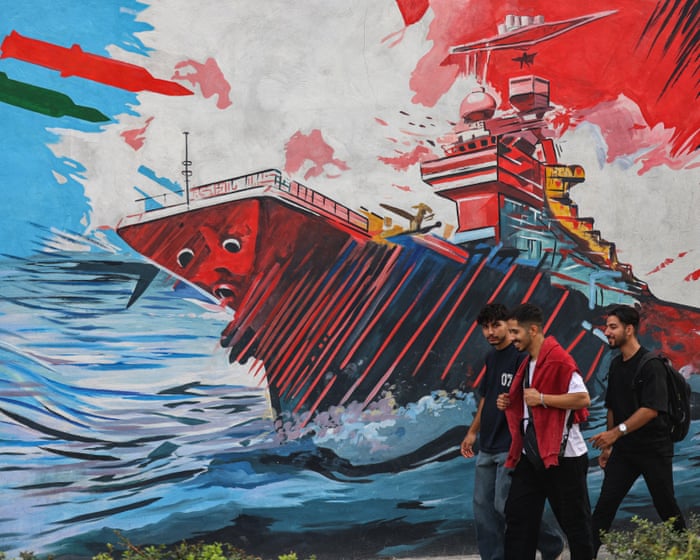 Photo: The Guardian
Iranian and Qatari officials held a third straight day of indirect talks in Doha on Sunday, seeking a deal to reopen the Strait of Hormuz and head off possible new U.S. attacks on Iran after Tuesday's midterm elections. Qatar is trying to negotiate the release of more than $6bn in Iranian assets and a plan to compress the sequence in which the U.S. lifts sanctions, Iran reopens the strait and nuclear talks restart. Iran has agreed to cut that timetable from seven days to two. Iranian Foreign Minister Abbas Araghchi said no meeting with an American delegation had occurred or been planned, and there was no sign Washington accepts Tehran's conditions. UAE envoy Anwar Gargash said Gulf states were bracing for the worst while a new escalation served no one's interests. On Friday, unidentified missiles hit a Pakistan-bound Qatari LNG tanker near the strait, hours after Tehran had cleared its passage. Israel's Yedioth Ahronoth reported that Israel had finished preparing for renewed confrontation, with the decision resting with President Trump, who was recently briefed by Adm. Brad Cooper of U.S. Central Command. Oil prices slipped in early Asian trade Monday.
Left-leaning outlets NPR and The Guardian frame the story around Gulf anxiety and Qatari mediation. NPR's headline says the region is on edge as Qatar tries to stave off new U.S. attacks after the midterms. The Guardian's headline says negotiators are "braced for worst," and it leads with Gargash, the frozen assets and the tanker strike. Both stress the election deadline. Right-leaning outlets had not reported this story at the time of writing, while left-leaning and independent outlets had. Among independent outlets, Antiwar.com is distinct: it quotes Araghchi on the lack of direct U.S. contact and highlights Israeli rehearsal flights and Trump's decision power. Reuters focuses on oil prices falling on optimism about the talks. The left and independent outlets agree on the core facts: the third day of talks and the seven-to-two-day timetable. They differ in emphasis, from regional nerves to military preparations and market reaction.
How the sides differ Left sources stress Gulf anxiety and Qatar's mediation; alternative sources add Israeli attack preparations and oil prices; right-leaning outlets have not covered the story.
Headline, comparison and summary written by AI from the articles below. AI can make mistakes, so check the original articles before relying on a detail.
NPR and The Guardian lead with Gulf states' anxiety and Qatar's mediation before Tuesday's midterms, featuring UAE envoy Anwar Gargash, the $6bn in Iranian assets and the tanker strike.
Antiwar.com leads with Araghchi's denial of direct U.S. talks and Israeli attack preparations reported by Yedioth Ahronoth; Reuters focuses on oil prices easing on optimism about the Qatari-led talks.
Not covering this story. None of the right-leaning outlets Crosswire tracks has reported it yet. What one side leaves out can be as telling as what the others report.