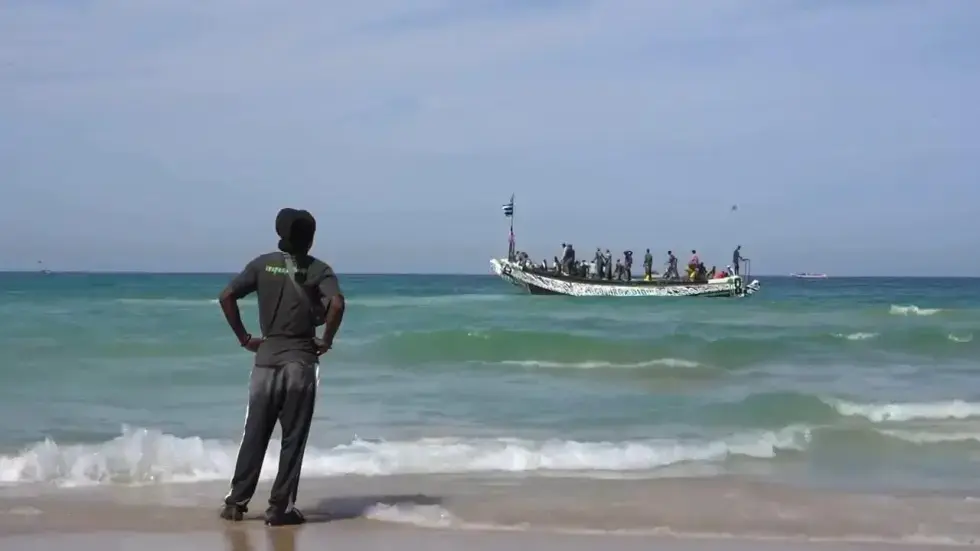
Young Senegalese risk Atlantic crossings to Spain as Canary Islands arrivals pass 29,000
Thousands of young people from Senegal and the Gambia are risking Atlantic crossings in fishing boats to reach Spain's Canary Islands.
How the sides differ Left sources pair one fisherman's story with visa and arrival data; independent and right sources open with the same personal account, with no disagreement.
Independent AP'No future here': Why Senegal’s young people risk their lives to reach Europehow they cover it
Opens with Diop's account of 15 days adrift and two later near-arrests, centering the story on his personal experience.
Right Newsmax'No Future Here': Why Senegal's Young People Risk Their Lives to Reach Europehow they cover it
Opens with the same account of Diop's first attempt, 15 days adrift with only seawater to drink, centering on his experience.
Left Los Angeles TimesPaywall‘No future here’: Why Senegal’s young people risk their lives to reach Europehow they cover it
Opens with Diop's near-fatal crossing, then adds visa barriers, European spending and Spanish arrival figures to explain why young Senegalese leave.
Thousands of young people from Senegal and the Gambia are risking Atlantic crossings in fishing boats to reach Spain's Canary Islands. More than 29,000 have arrived this year, Spanish authorities said, even though Europe has spent millions of dollars to reduce departures. A record 16,000 came in November alone. Among those planning to try again is Baye Coura Diop, 23, of Kayar, Senegal. His first attempt nearly killed him, he said: the overcrowded pirogue lost its way and he spent 15 days adrift with only seawater to drink. On his second and third attempts, he narrowly escaped arrest by Senegalese authorities.
Legal routes to Europe are largely out of reach for ordinary West Africans. They face some of the world's highest visa rejection rates, strict documentation requirements and invasive checks. The Atlantic route is so dangerous that it has been dubbed “Barcelona or die.” Diop, sitting among empty nets and pirogues abandoned by owners who left for Spain, said: “Half of my friends are in Europe.” He has already paid a smuggler and is waiting for the signal to leave.
The Los Angeles Times opens with Diop's story and then adds wider context. It includes visa rejection rates, documentation rules, European spending and the Canary Islands arrival figures from Spanish authorities. AP and Newsmax open with the same account of Diop's 15 days adrift and his later attempts, and they run the same headline wording. Their coverage centers on Diop in the same way. No outlet offers a competing number or claim, so the sides do not clash on facts. The one visible difference is how much policy and data surrounds Diop's account in the left-leaning coverage.
Headline, comparison and summary written by AI from the articles below. AI can make mistakes, so check the original articles before relying on a detail.
How we sort sources into left, independent and right →
Which coverage felt most fair?
One tap. No account needed.