French PM Asks for Partial Local Curfews After Weekend Protests Turn Violent
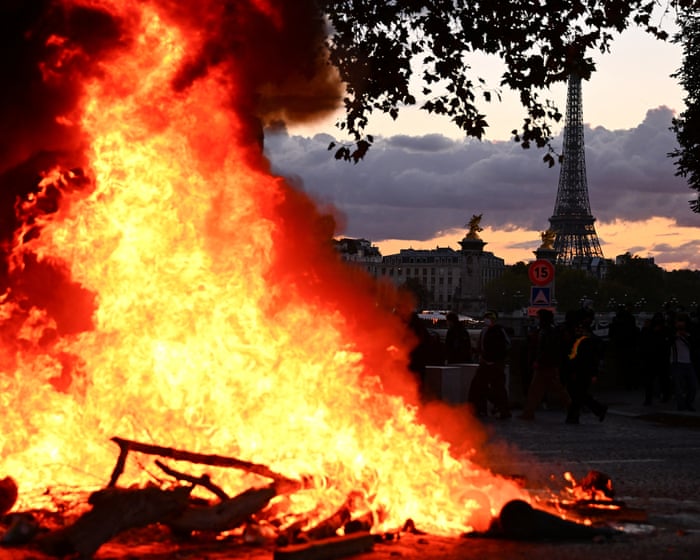 Photo: The Guardian
How the sides differ Left and alternative sources largely agree; left sources add Macron's criticism and the arrest count, alternative sources stress protecting businesses, and right sources have not covered it.
French Prime Minister Sébastien Lecornu said on Monday that he has asked regional authorities to impose partial, localised curfews in certain urban areas, with new measures starting that night, after weekend demonstrations spilled over into street violence. Speaking after a crisis meeting, he said the step is meant to stop further disorder and protect businesses. He blamed the ultra-left, along with some criminal elements, for seeking to orchestrate deep unrest across the country. President Emmanuel Macron criticised the unrestrained violence, and about 2,400 arrests have been made across France.
Right-leaning outlets had not reported this story at the time of writing, while left-leaning and alternative or independent outlets had. The Guardian, on the left, leads with Lecornu blaming the extreme left and seeking curfews, and adds Macron's criticism and the arrest total. France 24, in the alternative group, presents a replay of Lecornu's remarks, stressing the curfews' limited scope and aim of protecting businesses, along with his accusation against the ultra-left. Both agree on the curfews and the accusation.
Headline, comparison and summary written by AI from the articles below. AI can make mistakes, so check the original articles before relying on a detail.
The Guardian's live coverage leads with Lecornu blaming the extreme left and seeking partial curfews, and adds Macron's criticism of the violence and the figure of 2,400 arrests.
France 24 offers a replay of Lecornu's post-meeting remarks, stressing that the curfews are partial and localised to protect businesses, and noting his accusation against the ultra-left.
Not covering this story. None of the right-leaning outlets Crosswire tracks has reported it yet. What one side leaves out can be as telling as what the others report.