California Voters Decide on Proposition 40, a One-Time 5% Tax on Billionaires' Net Worth
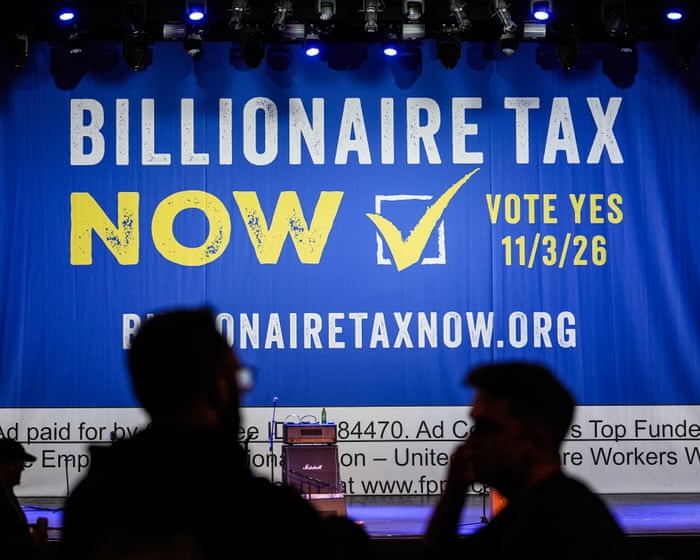 Photo: The Guardian US
California voters are set to decide on Nov. 3 whether to enact Proposition 40, a one-time 5% tax on the net worth of taxpayers and trusts with more than $1 billion in assets, which would be the first such tax on billionaires anywhere in the world. Organizers estimate it would raise about $100 billion from roughly $2.3 trillion in wealth held by about 250 state billionaires in mid-2026. The money would go mainly to state healthcare programs, with some for public education and food assistance. The tax would be payable over five years and cover businesses, securities, art, collectibles and intellectual property, while real property, pensions and certain retirement accounts would be exempt. As drafted, it applies retroactively to people who were California residents on Jan. 1, 2026. Some billionaires, including Larry Page, Sergey Brin, Larry Ellison and Peter Thiel, have reportedly moved or relocated businesses. Two economists studying the measure reached sharply different conclusions about whether it would fill or drain state coffers. Wealthy residents have organized against it, and Democrats in the state are split.
The left-leaning Guardian US ran an opinion piece by wealthy Californian George Zimmer arguing the tax would ease inequality and fund healthcare without triggering an exodus, citing six Nobel-winning economists. NPR took a more analytical approach, presenting two economists' conflicting findings on whether the tax would raise or lose revenue. Right-leaning Fox Business framed the vote as a risk to California's economic future, featuring gubernatorial candidate Steve Hilton and business leader Robert Lapsley warning of lost jobs, listing departing billionaires, and noting an analysis that the tax could permanently shrink the tax base. The New York Post instead profiled Los Angeles voters, many of whom backed both the billionaire tax and voter ID and dismissed worries about an exodus. Both sides describe the same terms and the $100 billion estimate, but they differ on whether the departures are a real danger. The Hill, listed as alternative, stressed Democratic divisions and nuanced economic effects.
How the sides differ Left sources emphasize inequality, healthcare funding and economists' views; right sources stress billionaire departures and job risks; alternative sources focus on divisions among Democrats and uncertain economic effects.
Headline, comparison and summary written by AI from the articles below. AI can make mistakes, so check the original articles before relying on a detail.
The Guardian US carries an op-ed by wealthy Californian George Zimmer backing the tax and citing Nobel economists, while NPR examines two economists' sharply conflicting conclusions on whether it would raise or drain state revenue.
The Hill focuses on how the measure divides California Democrats, as wealthy residents organize against it and experts describe its broader economic impact as nuanced.
Fox Business features Steve Hilton and Robert Lapsley warning of job losses and billionaire departures, while the New York Post reports on Los Angeles voters who often support both the tax and voter ID.