Bomb Threats Hit Seven Flights Across Europe; All Land Safely, No Explosives Found
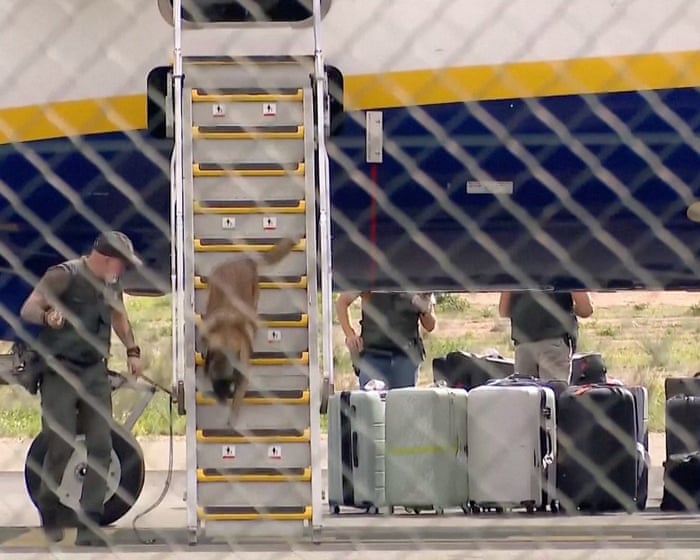 Photo: The Guardian
Seven passenger planes across Europe were searched or diverted after bomb threats were made against flights, and all landed safely with no explosives found, authorities said. Two of the flights departed from the UK, one from Heathrow and one from Manchester. Downing Street called the incidents "malicious hoaxes", and a UK Department for Transport source said the low-level threats were not credible. Two Ryanair flights, one from Dublin and one from Lisbon, were searched after landing in Rome, and Italian fighter jets escorted the Dublin flight. Modlin, one of Warsaw's two main airports, was briefly closed after receiving a diverted plane, and Polish officials said two flights heading to the capital were threatened. Planes were also searched in Spain and Bulgaria, and flights from Denmark were among those affected. No official link between the incidents has been established, but authorities in several countries are co-operating to assess whether they were a coordinated attempt to disrupt airspace.
Left-leaning outlets The Guardian and The New York Times lead with the disruption and the reassurance. The Guardian quotes Downing Street's "malicious hoaxes" description and the Transport Department source on credibility, lists the countries involved and notes there was little obvious pattern. The Times, in the excerpt available, says officials are investigating at least seven planes and that no explosives were found. Right-leaning outlets had not reported this story at the time of writing, while left-leaning and alternative outlets had. Alternative outlets Al Jazeera and BBC News share the facts but add distinct angles: Al Jazeera stresses that several countries are investigating possible coordination, while the BBC adds Rome airport sources and aviation security expert Paul Mason. He called the incidents unusual and suggested a deliberate act by a typical actor rather than coincidental calls. That is a more cautious reading than the UK government's hoax framing.
How the sides differ Left sources stress UK officials calling the threats non-credible hoaxes; alternative sources add an expert's view of deliberate action; right sources had not covered it.
Headline, comparison and summary written by AI from the articles below. AI can make mistakes, so check the original articles before relying on a detail.
- The New York TimesPaywallBomb Threats Disrupt Several Flights Across Europe
The Guardian and The New York Times lead with seven planes searched or diverted, safe landings and no explosives. The Guardian features Downing Street and a Transport Department source calling the threats hoaxes and not credible, while noting the lack of an obvious pattern.
Al Jazeera and BBC News emphasize possible coordination being investigated across countries. The BBC adds Rome airport sources, the UK government statement and security expert Paul Mason, who calls the threats unusual and possibly deliberate.
Not covering this story. None of the right-leaning outlets Crosswire tracks has reported it yet. What one side leaves out can be as telling as what the others report.