California Voters Narrowly Reject Proposition 40 Billionaire Wealth Tax
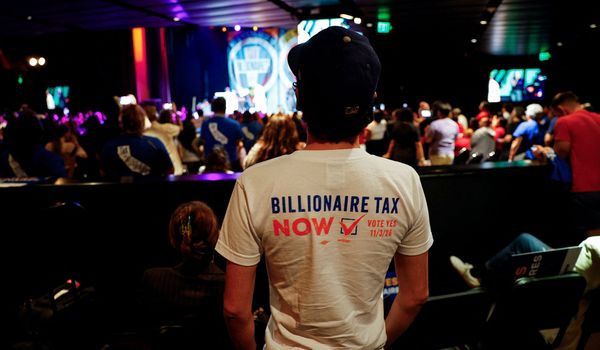 Photo: National Review
California voters narrowly rejected Proposition 40 on November 3. The measure was a one-time 5 percent tax on the net worth of the state's roughly 200 billionaires. Backers intended the revenue to fund health care, including backfilling federal Medicaid cuts in President Trump's One Big Beautiful Bill Act. The opposition group Building a Better California raised more than $333 million, much of it from tech figures. Google co-founder Sergey Brin gave $102 million and former Google CEO Eric Schmidt gave $40 million. Sen. Bernie Sanders (I-Vt.) put opposition spending at $425 million and said opponents won only 52 percent of the vote. The union SEIU-United Healthcare Workers West sponsored the measure and supplied the signatures and most of the campaign money. A September Public Policy Institute of California poll of likely voters had it ahead 52 percent to 46 percent. Sanders vowed to pass a federal billionaire wealth tax, and a San Francisco organizer said advocates would seek a state billionaire tax in 2028.
National Review, on the right, looks at the idea's origins, tracing it from economist Thomas Piketty to UC Berkeley and a Boston insurance executive's foundation. It stresses that California drew 62 percent of U.S. venture capital in 2025 and that taxing founders on paper value might drive them away. The New Republic, on the left, leads with billionaire spending and a loophole that let donors give appreciated stock without capital gains tax, citing The New York Times, and ties the result to Democratic wins and tax hikes in Washington and Colorado. Both note the narrow loss and the union's role. They differ on emphasis: the right on the policy's risks and pedigree, the left on donor tax advantages. Consortium News, an independent outlet, differs by centering Sanders and calls for a national tax.
How the sides differ Right sources examine the tax's intellectual origins and risk to venture capital; left sources stress billionaires' donation tax break; alternative sources highlight calls for a national tax.
Headline, comparison and summary written by AI from the articles below. AI can make mistakes, so check the original articles before relying on a detail.
The New Republic leads with the $333 million-plus opposition campaign and a tax break for donors giving appreciated stock, linking the result to populist anger at billionaires and to tax hikes elsewhere.
Consortium News centers Sen. Bernie Sanders' statements on opposition spending and the 52 percent result, plus an organizer's push for a national billionaire tax and a 2028 state effort.
National Review reports the narrow rejection, then traces the idea's roots from Piketty to Berkeley, noting the union sponsor and venture-capital risks.