Spain's Transport Minister Óscar Puente Resigns After Crash That Killed 69 on Madrid-Seville Line
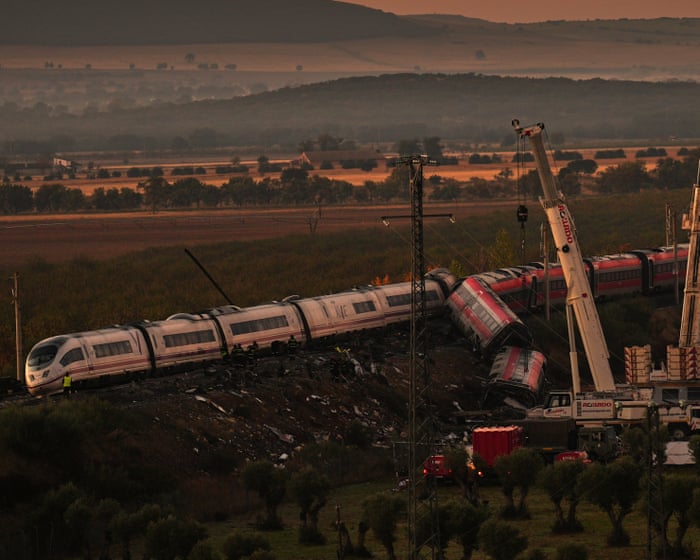 Photo: The Guardian
Spain's Transport Minister Óscar Puente announced his resignation on Tuesday, six days after a high-speed train collision south of Madrid killed 69 people. He made the announcement at the end of an hourslong appearance before lawmakers in the Congress of Deputies, and said he was also withdrawing from the November 29 general election. The crash happened at 8.53am last Wednesday near Urda in Castilla-La Mancha, when a Renfe high-speed train hit the back of a stationary train run by the private company Iryo. More than 100 people were injured. It was the second deadly accident on the Madrid-Seville line this year: in January, a train collision near Adamuz in Andalucía killed 46 people, and the cause of that crash is still under investigation. Puente told MPs that a transport minister in Spain could not stay in office after two accidents of such seriousness in less than a year, whether or not he bore direct responsibility. He said he made his decision in the first minutes after the tragedy and chose to announce it before Parliament. The crash came after a communication system key to the line's security system went down, and controllers in Madrid cleared the Renfe train despite the stopped Iryo train ahead. Puente has announced safety measures, including better conditions in control centers. Prime Minister Pedro Sánchez is trailing in polls ahead of the vote.
The left-leaning Guardian takes a political and human angle, with a correspondent's first-person account of covering both crashes, the community response in Urda, and the damage to public confidence in the rail network as Sánchez's coalition tries to rebuild trust before the election. The New York Times headline leads with the resignation and the fact that this was the second high-speed rail accident in under a year. The right-leaning Just the News also leads with the resignation, but gives more on the cause: the communication failure, the controllers' go-ahead for the Renfe train, and Puente's safety measures. Both sides note the death tolls of 69 and 46 and the two-accident pattern. The left puts more weight on trust and the election; the right on operational detail. The Hindu and AP largely match the resignation account.
How the sides differ Left sources stress eroded public trust and the political stakes before the snap election; right sources focus on the communication failure behind the crash and Puente's safety measures.
Headline, comparison and summary written by AI from the articles below. AI can make mistakes, so check the original articles before relying on a detail.
- The New York TimesPaywallSpain’s Transport Minister Resigns After Deadly High-Speed Rail Crash
The Guardian examines damaged public trust and the pressure on Sánchez's coalition before the snap election, with a first-person reporter's view; The New York Times leads with the resignation and the second crash in under a year.
The Hindu and AP report the resignation before lawmakers, quoting Puente's remarks on the two accidents and noting the November 29 election and Sánchez's poll position.
Just the News reports the resignation using AP material, and adds detail on the communication failure, the controllers' clearance of the Renfe train, and Puente's announced safety measures.