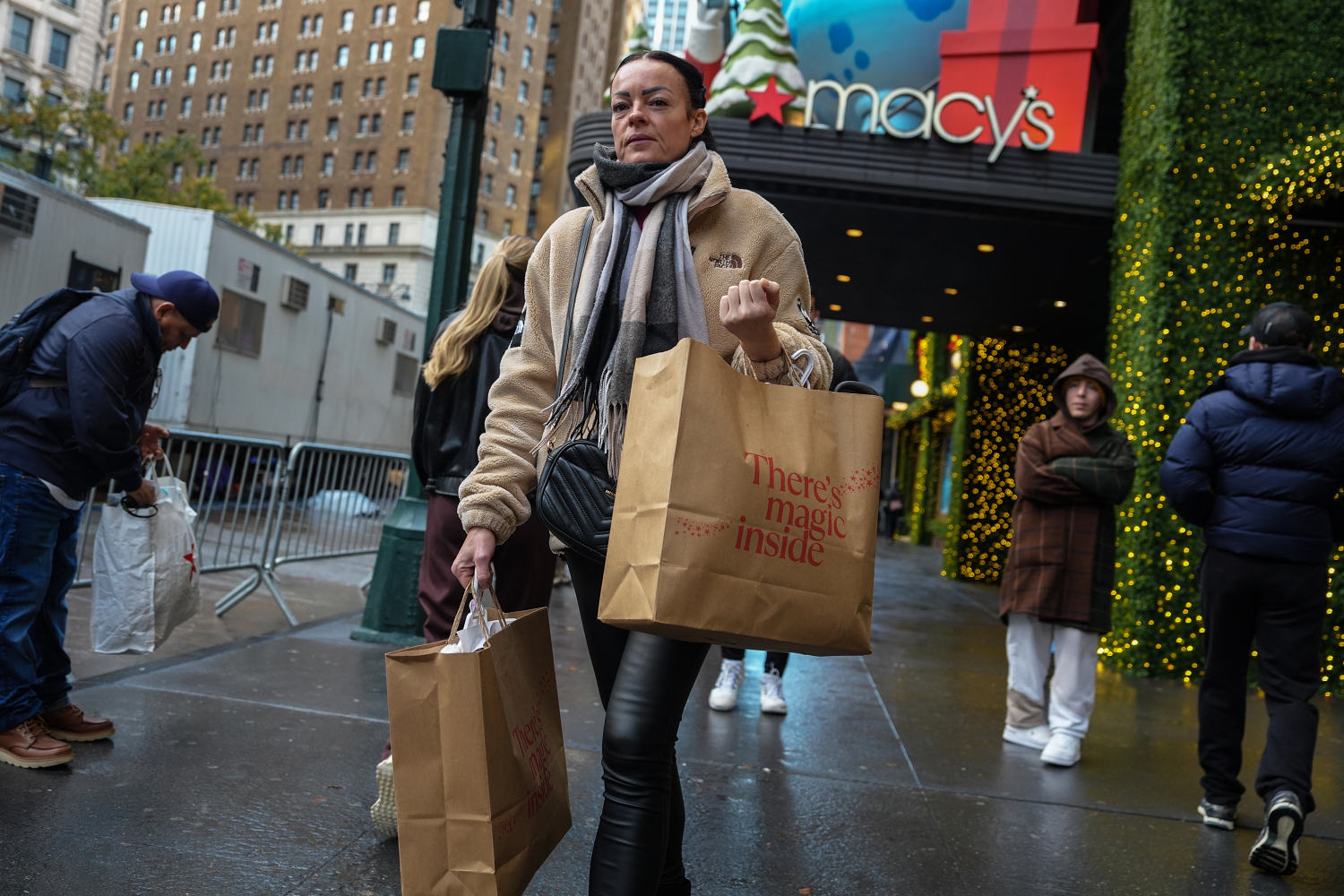
Shoppers across the U.S. headed to malls and outlets after Thanksgiving dinner to start Black Friday buying, while retailers also ran online sales. A trade-group survey expected more people in physical stores this holiday weekend than at any point since 2019. Crowds formed at the Citadel Outlets in Los Angeles on Thursday night. At the Dolphin Mall in Miami, early customers received mystery gift cards worth role="tabpanel" tabindex="-1"0 to $500. Online, Nordstrom offered discounts of up to 55 percent on brands including UGG, Ralph Lauren and Vince. “We love the bargains that we can get here,” said Sue Holloway, an English visitor shopping at the South Shore Plaza in Braintree, Mass.
The survey came from ICSC, a commerce industry group. It found nearly 90 percent of U.S. adults planned to spend over the weekend. More than 75 percent of Thanksgiving weekend shoppers planned to dine out, and more than 50 percent expected to spend on entertainment. Weather complicated the day. It delayed the Macy's parade in New York and brought flood alerts to Southern California, yet shoppers still lined up at Macy's before sunrise despite weeks of online deals. The NFL also played its fourth straight Black Friday game, Broncos (7-2) at Steelers (6-3) in Pittsburgh. Kickoff was 3 p.m. ET, and the game streamed on Prime Video. A 1961 law bars most Friday games in the fall unless they end before 6 p.m. local time.
Right-leaning outlets split their focus. The New York Post leads with Nordstrom's online discounts and first-person product picks. The Washington Times focuses on the in-person ritual, with early crowds at Macy's and the weather. Left-leaning outlets lead with physical stores. NBC News stresses crowds at malls in Los Angeles, Miami and Boston, and adds the survey figures and shopper quotes. CBS News highlights shoppers braving the cold for deals. Independent outlets differ most, covering the NFL game, its kickoff time, the 1961 law and the streaming details. One factual conflict appears: the New York Post says Nordstrom's deals run Friday, Nov. 27, while Billboard lists the game as Thursday (Nov. 27). All sides agree the holiday shopping push began right after Thanksgiving.
How the sides differ Right sources stress online discounts and the pre-dawn shopping ritual; left sources stress in-person crowds and survey data; independent sources cover the NFL game.
Headline, comparison and summary written by AI from the articles below. AI can make mistakes, so check the original articles.
NBC News leads with in-person crowds at malls in several cities, survey figures and shopper quotes. CBS News highlights shoppers braving cold weather for deals after Thanksgiving dinner.
CBS Sports explains why the NFL's Black Friday game kicks off at 3 p.m. ET under a 1961 law. Billboard gives the matchup, records, location and streaming details.
The New York Post highlights Nordstrom's online discounts with first-person product picks. The Washington Times describes pre-dawn crowds at Macy's, the weather and a returning shopping ritual despite online deals.
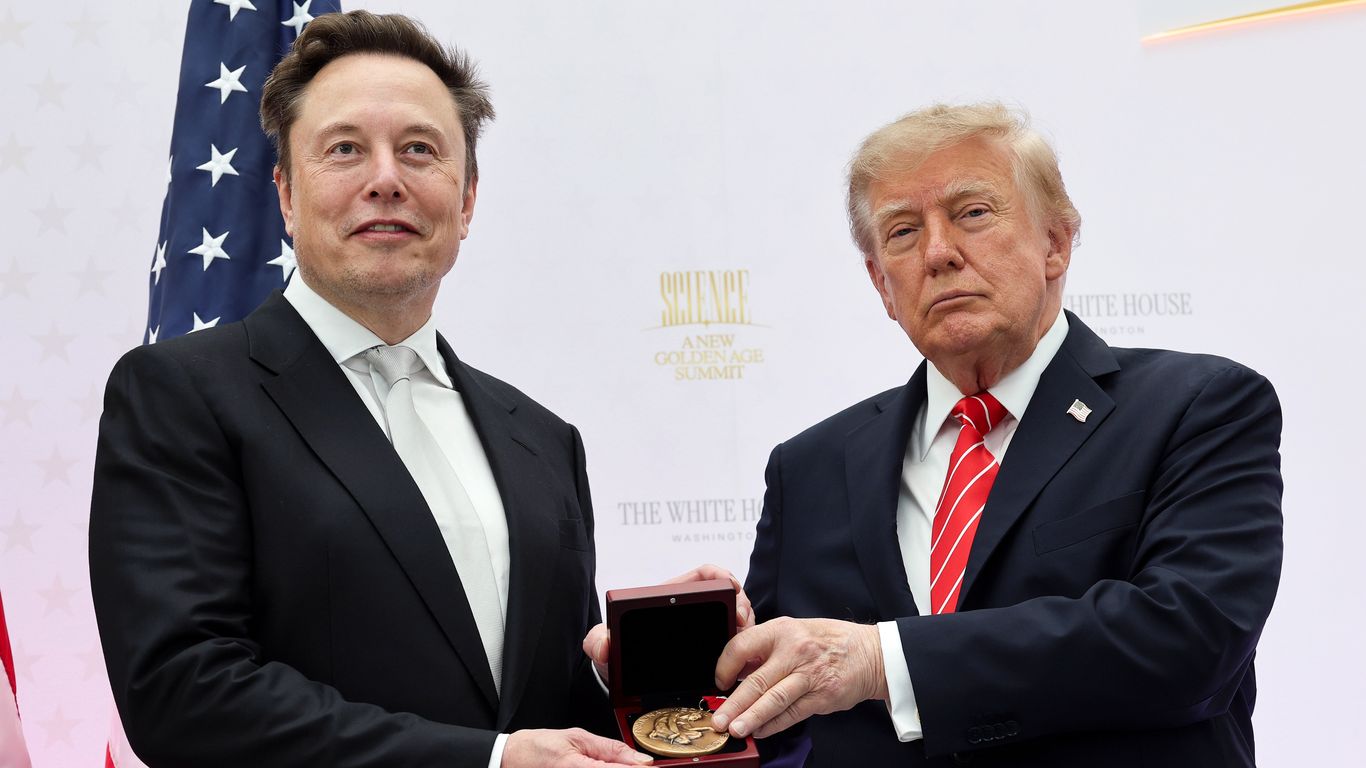
Elon Musk and SpaceX said Wednesday that every child in the United States will receive two SpaceX shares, doubling a pledge Musk made in October. The gift is worth about role="tabpanel" tabindex="-1"8 billion and goes to the roughly 70 million children eligible for Trump Accounts, the tax-advantaged investment accounts the White House created. SpaceX will contribute one newly issued Class A share to each account, and Musk will personally match it. SpaceX president Gwynne Shotwell is also donating shares to more than 2 million children. On Thursday, Musk said he will give every child another share each year. “Every child in America will receive two SpaceX shares, one from the company and one from me personally,” Musk wrote on X.
Musk called his October pledge the “first of many” planned gifts. The Trump administration automatically enrolls children under 18 with a valid Social Security number, but parents or guardians must still claim the account. SpaceX's share will transfer next month. Musk's own share will transfer when his lockup expires in June next year. A SpaceX share closed at role="tabpanel" tabindex="-1"27.44 on Wednesday, and about 13.5 billion shares are outstanding. The announcement came hours after the Federal Communications Commission approved SpaceX's plan to deploy 1 million satellites for data centres in space.
Left-leaning coverage, such as CBS News, leads with how the gift works. It explains the Trump Account mechanics, the doubled pledge, Shotwell's donation, the 70 million eligible children and the need for parents to claim accounts. Right-leaning coverage centers on Musk himself. The Washington Examiner quotes his X posts, his predictions about SpaceX's future value and the share price, and The Daily Signal runs an opinion piece titled Musk Is an American Hero. Independent coverage differs most. Al Jazeera ties the gift to the FCC approval, scrutiny of tech billionaires and astronomers' objections, including the American Astronomical Society's “disheartened and dismayed” response. Investing.com focuses on the yearly share. The outlets agree on the two-share structure, the role="tabpanel" tabindex="-1"8 billion value and the Trump Accounts; they do not conflict on facts.
How the sides differ Left sources stress how the Trump Accounts gift works; right sources feature Musk's own words and praise; independent sources add the FCC approval, AI scrutiny and annual shares.
Headline, comparison and summary written by AI from the articles below. AI can make mistakes, so check the original articles.
The Washington Examiner relays Musk's X posts, share price and long-term value claims, while The Daily Signal's opinion piece praises Musk and cites the Starship launch.
Al Jazeera links the gift to the FCC satellite approval and tech-sector scrutiny, quoting an analyst and astronomers; Investing.com reports Musk's plan for yearly shares.
CBS News leads with the doubled pledge and how shares reach Trump Accounts, citing SpaceX's statement, Shotwell's donation, eligibility figures and the claiming requirement for parents.
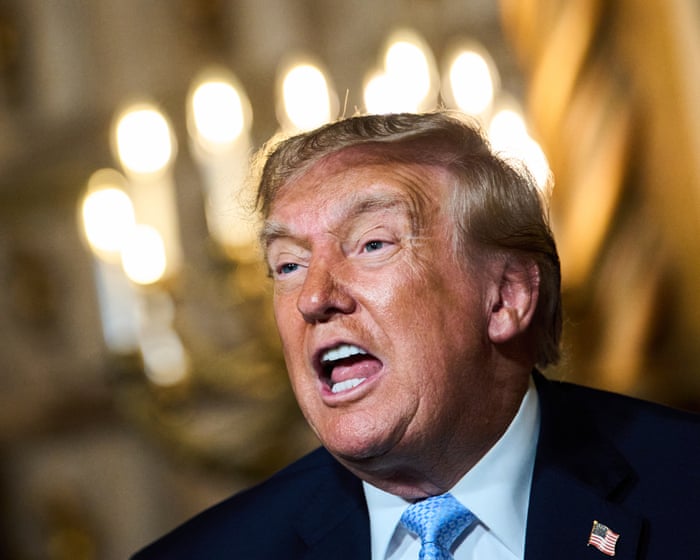
President Donald Trump said Thursday that reinstated Nvidia CEO Jensen Huang poses no national security threat, days after Huang returned to the job he left earlier this month. Trump's backing keeps the scandal over Huang's affair, and its possible link to Chinese chip access, in front of Congress and the public. Speaking to reporters at Mar-a-Lago after a Thanksgiving event, Trump said, “Based on information and belief, I think he's absolutely fine.” Asked what information he meant, he answered, “The information I have, which is a lot of information.” Trump said he had not spoken with Huang since the reinstatement but expected to soon. He predicted Huang would do better in his second stint than in his first.
Huang resigned after admitting to an affair in a note to staff. The affair was with a business executive who reportedly has ties to Chinese intelligence and whose company may have helped China obtain advanced chips in violation of U.S. export controls. Nvidia's stock fell after the resignation. The Trump administration has since added MegaSpeed to the Commerce Department's trade blacklist. The Justice Department would not confirm it had conducted a thorough investigation. Lawmakers are lining up to investigate, and next week is expected to be crucial for Nvidia's relationship with Congress.
On the right, Fox Business leads with Trump's defense and his own words, while the Washington Examiner places the affair inside the US-China AI race and recalls Huang's earlier remark that China would win it. On the left, MS NOW focuses on lawmakers preparing investigations. HuffPost instead highlights Denny's restoring a plaque honoring Huang, and it describes the affair as an infidelity scandal. The two sides clash on emphasis: right-leaning coverage centers on Trump's reassurance, while left-leaning coverage centers on congressional scrutiny. Independent coverage from The Hindu reports Trump's remarks but adds that the Justice Department would not confirm a thorough investigation. All sides agree that Huang resigned, returned, and remains under scrutiny.
How the sides differ Right sources stress Trump's defense of Huang and the US-China AI race; left sources stress congressional investigations and Denny's plaque; independent sources add the Justice Department's silence.
Headline, comparison and summary written by AI from the articles below. AI can make mistakes, so check the original articles.
The Hindu reports Trump's remarks and notes the Justice Department would not confirm a thorough investigation. MarketWatch runs a personal-finance column on Huang's return and a 401(k).
Left · 2 sourcesTPTalking Points MemoSaving Private Jensen!1 more source · how they cover it
MS NOW reports lawmakers lining up to investigate Nvidia and question Huang. HuffPost covers Denny's restoring a plaque honoring him, quoting the chain's social media post.
Fox Business leads with Trump's defense of Huang, quoting him at length. The Washington Examiner frames the affair within the US-China AI race and Huang's earlier comments.
President Donald Trump demanded an immediate investigation on Thursday, Thanksgiving Day. He alleged without evidence that economic figures released before the Nov. 3 midterm elections were fake. The target is the Commerce Department's Bureau of Economic Analysis, which on Wednesday raised its estimate of third-quarter annualized GDP growth to 4.3% from an advance estimate of 3.4%. The agency issued that earlier figure on Oct. 29, five days before an election in which Republicans suffered heavy losses. In a Truth Social post, Trump asked, “Why wasn't the correct number issued before the Election?” He called the gap “a massive, and purposeful, error.”
The Bureau of Economic Analysis routinely updates its data to improve accuracy. GDP figures, monthly jobs reports and other data are regularly revised on a prescheduled basis, without regard to the political calendar. Trump has repeatedly sought to undermine trust in economic data that does not match his claims of a historic boom. He has said since taking office in January 2025 that a golden age is under way. His holiday message also wished a happy Thanksgiving to critics, including the Commerce Department, immigrants and the “radical far left.”
Left-leaning outlets focus on the missing evidence and the routine nature of revisions. CBS News also describes Trump's Thanksgiving in Florida and his calls to service members. The Guardian adds that many Americans face a higher cost of living worsened by the economic fallout of the Iran war. Right-leaning outlets focus on the figures and Trump's argument. Fox Business details the 0.9-point revision and the Oct. 29 release date, and includes an interview with former Trump adviser Steve Moore. The Washington Examiner highlights Trump's claim that the economy is doing FAR BETTER than the earlier numbers showed. The sides agree on the 4.3% and 3.4% figures, the timing and Trump's demand. Left outlets and Fox Business both report he offered no evidence. Independent outlets Al Jazeera and TRT World stress that the revision was routine and that the dispute threatens trust in the data.
How the sides differ Left sources stress the lack of evidence and routine revisions; right sources stress the numbers and Trump's claim the economy is stronger; independent sources stress credibility.
Headline, comparison and summary written by AI from the articles below. AI can make mistakes, so check the original articles.
European Union leaders chose Pablo Hernández de Cos, the former head of Spain's central bank, on Thursday to be the next president of the European Central Bank. He will succeed Christine Lagarde and become the first Spaniard to lead the bank. He defeated Klaas Knot, the former head of the Dutch central bank, after France and Germany backed him. Leaders also agreed two executive board posts: Laurence Boone of France and Markus Brunnermeier of Germany. French President Emmanuel Macron said, “A consensus emerged on the nominations to the European Central Bank.”
The three picks were a package deal reached at the European Council summit. European Council president António Costa said the formal appointment is due in December. The European Parliament and the ECB's Governing Council must be consulted, but neither can veto the choice. Lagarde has said she will step down on Feb. 7, 2027, and the new president serves an eight-year term. De Cos is 55. He was Bank of Spain governor from 2018 to June 2024, chaired the Basel Committee on Banking Supervision, and has run the Bank for International Settlements since July 2025.
The Washington Times, on the right, frames the choice around the economic pressures ahead. It cites inflation driven by the war in Iran and worries about high government debt and borrowing costs. The Guardian, on the left, leads with the political deal among the EU's biggest countries and the Spanish milestone. It quotes Costa, Macron and Spanish Prime Minister Pedro Sánchez, who hailed “a Spain that is leading in Europe as never before.” It adds that Sánchez faces elections this weekend that he is predicted to lose. The New York Times focuses on Lagarde's early exit and two looming board vacancies. CNBC adds de Cos's career record, and Semafor links the job to France's fiscal crisis. The outlets do not contradict each other on the facts. They differ mainly in what they stress.
How the sides differ Right sources stress inflation and debt pressures; left sources emphasize the political deal and Spain's first ECB chief; independent sources add background and France's fiscal risk.
Headline, comparison and summary written by AI from the articles below. AI can make mistakes, so check the original articles.
The Guardian leads with the deal among the EU's biggest countries and Spain's first ECB president, quoting Costa, Macron and Sánchez. The New York Times focuses on Lagarde's early exit and board vacancies.
CNBC details de Cos's career and the formal appointment process. Semafor links the job to inflation, rising debt and France's fiscal crisis before its presidential election.
The Washington Times reports the leaders' choice of de Cos and sets it against inflation driven by the war in Iran, high government debt and borrowing costs.
China said Thursday it reserves the right to take necessary measures after the Trump administration proposed new tariffs on 14 major trading partners. The proposal, announced Wednesday, raises tensions as Washington and Beijing try to extend a trade truce set to expire.
China faces the highest capped rate, 20%. In some cases that rate would stack on other import taxes for a total of 45%. Commerce ministry spokesman He Yadong urged the United States to return to dialogue and consultation. Brazil, also singled out, said “Brazil will not yield to this type of threat.” China, Japan and other partners also rejected claims that they have excess manufacturing capacity. The tariffs are likely to take effect early next year.
The Office of the US Trade Representative proposed 18% on Bangladesh, Cambodia and Thailand, and 20% on China and Vietnam, subject to their trade deals. It proposed 17% on India if it reaches a trade agreement, and up to 25% without one under Section 301 investigations into excess production capacity. Brazil's talks with Washington had stalled. Its government objected to higher taxes on raw and refined sugar and a new 10% tariff on aircraft. In February, Trump announced an India deal that cut tariffs to 18% from 50%. Analyst Atman Trivedi said the US hopes the lower rate pushes India to sign before the G20.
Newsmax, on the right, leads with China's warning of possible retaliation and the risk to truce talks. It centers on China and the 20% figure. The Guardian, on the left, also quotes China's ministry. It adds Brazil's statement, the 45% stacked rate and the phrase political manipulation for Beijing's view. NPR, also on the left, focuses on pushback from Democrats and some free trade advocates. Independent outlets differ most. AP covers protests from China, Japan and others over the excess-capacity claims. CNBC examines how the rates favor India over rival Asian exporters. All sides agree on the proposal, the 20% rate for China and Beijing's warning. No outlet reports a factual dispute, so the differences lie in whose reactions each one features.
How the sides differ Right sources stress China's retaliation warning and the trade truce; left sources add Brazil's response and Democratic pushback; independent sources cover Asian reactions and India.
Headline, comparison and summary written by AI from the articles below. AI can make mistakes, so check the original articles.
AP reports protests from China, Japan and other partners over excess-capacity claims. CNBC focuses on India's tariff advantage and quotes an analyst on deal prospects.
The Guardian pairs China's warning with Brazil's rejection and details stacked rates. NPR highlights opposition from Democrats and some free trade advocates.
The Trump administration proposed new tariffs on 14 major trading partners, including China and the European Union, on Wednesday. Governments in Asia and Brazil protested on Wednesday and Thursday. The new rates are likely to take effect early next year. China would face the highest capped rate, 20%, and in some cases that rate would stack on other import taxes for a total of 45%. Brazil's government said “Brazil will not yield to this type of threat.”
Brazil was singled out after trade talks stalled. Its government called the move a unilateral decision that undermines the ongoing bilateral negotiations. It objected in particular to higher taxes on raw and refined sugar and a new 10% tariff on aircraft. China's commerce ministry spokesman, He Yadong, urged Washington to return to dialogue and said Beijing reserves the right to take necessary measures. Beijing called the levies political manipulation. China, Japan and other partners also rejected allegations that they have excess manufacturing capacity.
The Washington Times leads with the breadth of the reaction, focusing on Southeast Asian trading partners protesting the planned increases on Thursday. The Guardian instead centers on China and Brazil, stressing the specific rates, the 45% stacked total and named statements from officials in both countries. AP, an independent outlet, widens the lens to China, Japan and other partners, and adds their pushback on excess-capacity claims and the early-next-year timing. The Washington Times excerpt does not mention the rate figures or the Brazil-specific complaints. The Guardian's opening does not mention Japan or the capacity allegations. No outlet disputes another's facts. All three agree the tariffs were announced Wednesday and that partners objected.
How the sides differ Right sources stress protests across Southeast Asia; left sources detail China's and Brazil's responses and rates; independent sources add rebuttals of overcapacity claims.
Headline, comparison and summary written by AI from the articles below. AI can make mistakes, so check the original articles.
Reports China, Japan and other partners protesting the plans and rejecting excess-capacity claims, and notes the tariffs are likely to take effect early next year.
Centers on China's and Brazil's official responses, giving tariff rates, specific products affected and direct statements from Chinese and Brazilian officials.